Italy Formally Submits Detailed Opinion to EU Obstructing Ireland's Disposable Vape Ban

Apr.10
Italy's Ministry of Enterprises and Made in Italy has submitted a detailed opinion against Ireland's proposed "Public Health (Single Use Vapes) Bill 2025." Italy argued that the comprehensive ban on disposable vapes lacks scientific evidence, violates the EU principle of the free movement of goods, and conflicts with the existing Tobacco Products Directive.

Key Takeaways

  •  According to a European Commission document, the standstill period for Ireland's bill banning disposable vapes has been formally extended to June 19, 2026.
  • Italy's Ministry of Enterprises and Made in Italy submitted a detailed opinion to the EU on March 19, 2026, opposing Ireland's "Public Health (Single Use Vapes) Bill 2025."
  • The Irish bill intends to prohibit the retail sale of disposable vaping devices nationwide, regardless of whether they contain nicotine.
  • Italy pointed out that Ireland's total ban constitutes a quantitative restriction, violating the Treaty on the Functioning of the European Union (TFEU) principle of free movement of goods.


2Firsts, April 10, 2026 


According to the European Commission, the EU's Technical Regulations Information System published a detailed opinion from Italy regarding Ireland's "Public Health (Single Use Vapes) Bill 2025." The bill originally planned to completely ban the retail sale of disposable vapes in Ireland.


Ban standstill period extended to June 2026


Under EU Directive 2015/1535, due to the submission of this detailed opinion by Italy, the standstill period for the Irish bill has been formally extended to June 19, 2026. During this period, Ireland may not adopt or implement the legislation.


Ireland notified the EU of the draft on December 18, 2025. The draft plans to completely ban the retail sale of any non-reusable vaping device, regardless of whether it contains nicotine. 


Italy's Ministry of Enterprises and Made in Italy submitted the formal objection to the European Commission on March 19, 2026.


Italy alleges ban violates EU principle of free movement of goods


In its detailed opinion, Italy explicitly stated that the Irish bill lacks scientific evidence and exceeds the existing EU regulatory framework. 


The ban constitutes a quantitative restriction under Article 34 of the Treaty on the Functioning of the European Union (TFEU), preventing products legally manufactured and sold in other EU member states from entering the Irish market, thereby violating the core principle of the free movement of goods.


At the same time, Italy argued that the measure is incompatible with Article 24 of the EU Tobacco Products Directive (2014/40/EU - TPD). 


The provision stipulates that member states can only ban specific categories of products under exceptional circumstances justified by the need to protect public health. Italy pointed out that Ireland failed to provide appropriate documentation proving the existence of such exceptional circumstances.


Lack of proportionality and alternative considerations


In its analysis of proportionality, Italy emphasised that Ireland's comprehensive ban failed to adequately assess less restrictive alternatives before restricting trade. 


For example, Ireland could have adopted stricter age control measures, targeted information campaigns, or differentiated taxation tools, rather than directly implementing a sales ban.


Furthermore, the ban was cited as undermining the "freedom of establishment" (Article 49 of TFEU) of legitimate EU operators already present or intending to operate in Ireland, raising risks of unequal treatment in market access and the fragmentation of EU regulations.


Image Source: European Commission

We welcome news tips, article submissions, interview requests, or comments on this piece.

Please contact us at info@2firsts.com, or reach out to Alan Zhao, CEO of 2Firsts, on LinkedIn


Notice

1.  This article is intended solely for professional research purposes related to industry, technology, and policy. Any references to brands or products are made purely for objective description and do not constitute any form of endorsement, recommendation, or promotion by 2Firsts.

2.  The use of nicotine-containing products — including, but not limited to, cigarettes, e-cigarettes, nicotine pouchand heated tobacco products — carries significant health risks. Users are responsible for complying with all applicable laws and regulations in their respective jurisdictions.

3.  This article is not intended to serve as the basis for any investment decisions or financial advice. 2Firsts assumes no direct or indirect liability for any inaccuracies or errors in the content.

4.  Access to this article is strictly prohibited for individuals below the legal age in their jurisdiction.


Copyright


This article is either an original work created by 2Firsts or a reproduction from third-party sources with proper attribution. All copyrights and usage rights belong to 2Firsts or the original content provider. Unauthorized reproduction, distribution, or any other form of unauthorized use by any individual or organization is strictly prohibited. Violators will be held legally accountable.

For copyright-related inquiries, please contact: info@2firsts.com


AI Assistance Disclaimer


This article may have been enhanced using AI tools to improve translation and editorial efficiency. However, due to technical limitations, inaccuracies may occur. Readers are encouraged to refer to the cited sources for the most accurate information.

We welcome any corrections or feedback. Please contact us at: info@2firsts.com

Wisconsin Vape Directory One Year On: Retailer Reports Four Store Closures and 70% Staff Cuts
Wisconsin's electronic vaping device directory has been fully enforced for more than a year, and local vape retailers say the reduced range of eligible products has contributed to declining sales, store closures and layoffs. Johnny Vapes owner Ben Hall said he has closed four of seven locations and cut about 70% of his staff. State law bars the sale of vaping devices not listed on the Wisconsin Department of Revenue directory and allows penalties of $1,000 per day for each unlisted device sold or offered for sale. In April 2026, the U.S. Court of Appeals for the Seventh Circuit allowed enforcement of the law to continue.
Regulations
Oct.10
STIIIZY Redesign Fails to Escape PAX Labs Patent Import Ban as Section 337 Case Also Involves China ALD
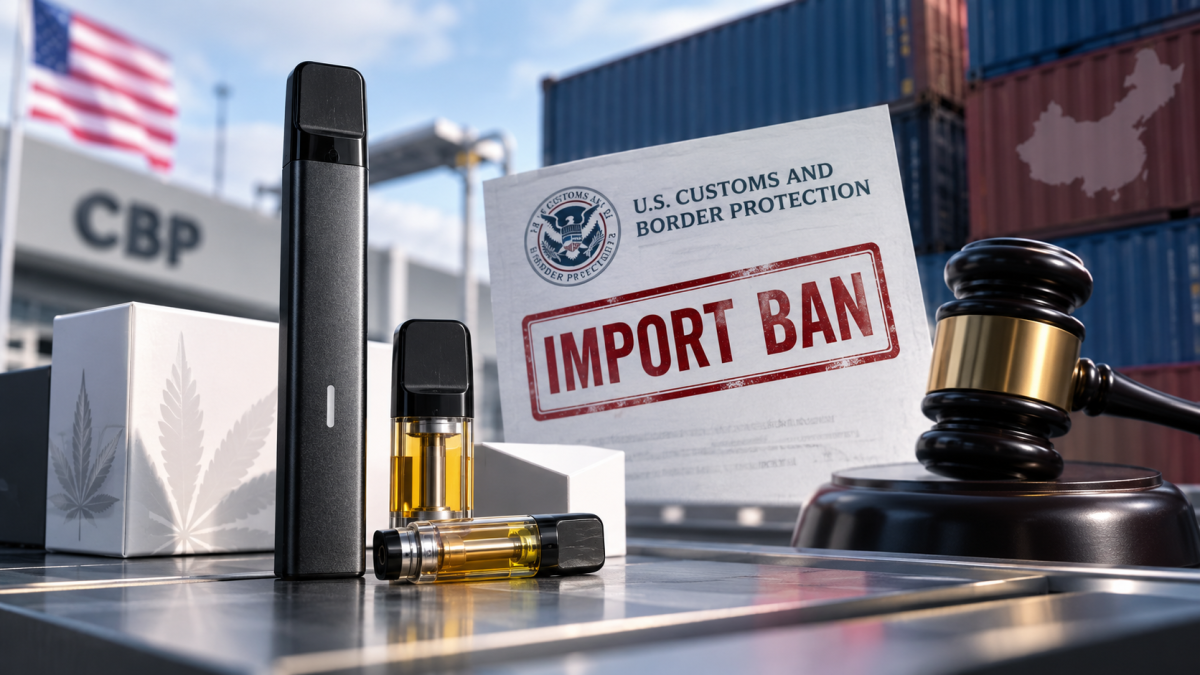
U.S. Customs and Border Protection ruled that STIIIZY had not shown that the redesigned cannabis-vape products covered by its latest request fall outside an ITC limited exclusion order tied to PAX Labs patents. CBP accepted some of STIIIZY’s claim-construction and non-infringement arguments, but the company did not address two additional claims in the same patent. Earlier STIIIZY redesigned cartridges and certain associated components imported with them had received separate CBP clearance.
Sep.16
Product | JT to Launch MEVIUS Tropical Option in Japan, Expanding Ploom Tobacco Stick Lineup to 32
Japan Tobacco (JT) will launch MEVIUS Tropical Option, a new tobacco stick for Ploom, nationwide in Japan from October 6, 2026. The capsule-format product combines mango-oriented sweetness with menthol cooling, adding a tropical flavor to the MEVIUS Ploom tobacco-stick lineup for the first time. Each pack contains 20 sticks and will launch at JPY 590. The product is compatible with all Ploom devices, and its addition will expand the Ploom tobacco-stick portfolio to 32 variants.
Sep.08
Australia-China Operation Dismantles Tobacco Smuggling Network: 112 Containers, 60 Arrests and A$92 Million in Illicit Tobacco
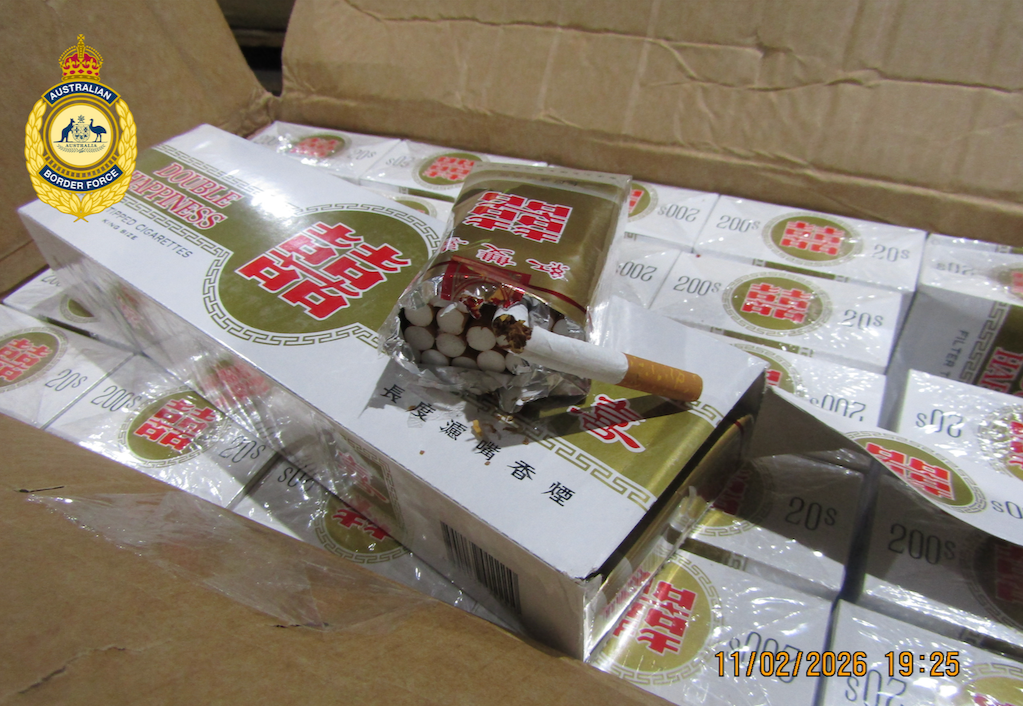
According to The Maritime Executive on August 19, 2026, the Australian Border Force (ABF) and China’s Anti-Smuggling Bureau of General Administration of China Customs worked together to dismantle an international illicit tobacco smuggling network targeting Australia. According to information released by ABF on August 20, sustained information sharing and cooperation led to investigations into 112 shipping containers, with 91 found to contain illicit tobacco. Authorities seized more than 60 million cigarettes and 60 kilograms of loose-leaf tobacco, representing more than A$92 million in unpaid duties. More than 60 people suspected of involvement in the network were arrested in China.
Aug.20
Product | IVG Launches NEXiO Prefilled Pod System, Expanding Beyond Disposable Vapes
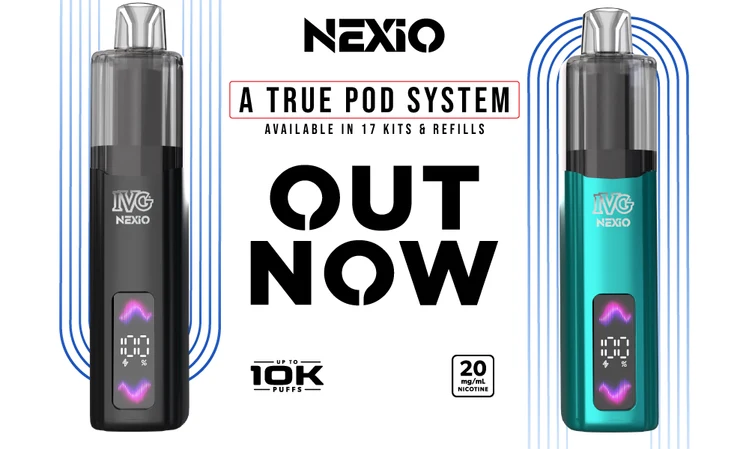
UK vape brand IVG has launched the NEXiO reusable prefilled pod system, expanding its product portfolio beyond disposable vape products. The device features a 1,000mAh rechargeable battery, prefilled pods with a refill reservoir structure and a claimed capacity of up to 10,000 puffs. Officially launched in the UK on July 9, 2026, NEXiO debuted with 17 flavor options, reflecting IVG’s move into reusable pod formats.
Aug.19
UK Vape Tax Countdown: Retailer Vape HQ Estimates 100ml E-liquid Prices Could Rise From £12.99 to £39.39, While Pod Kits Increase Less Than 10%
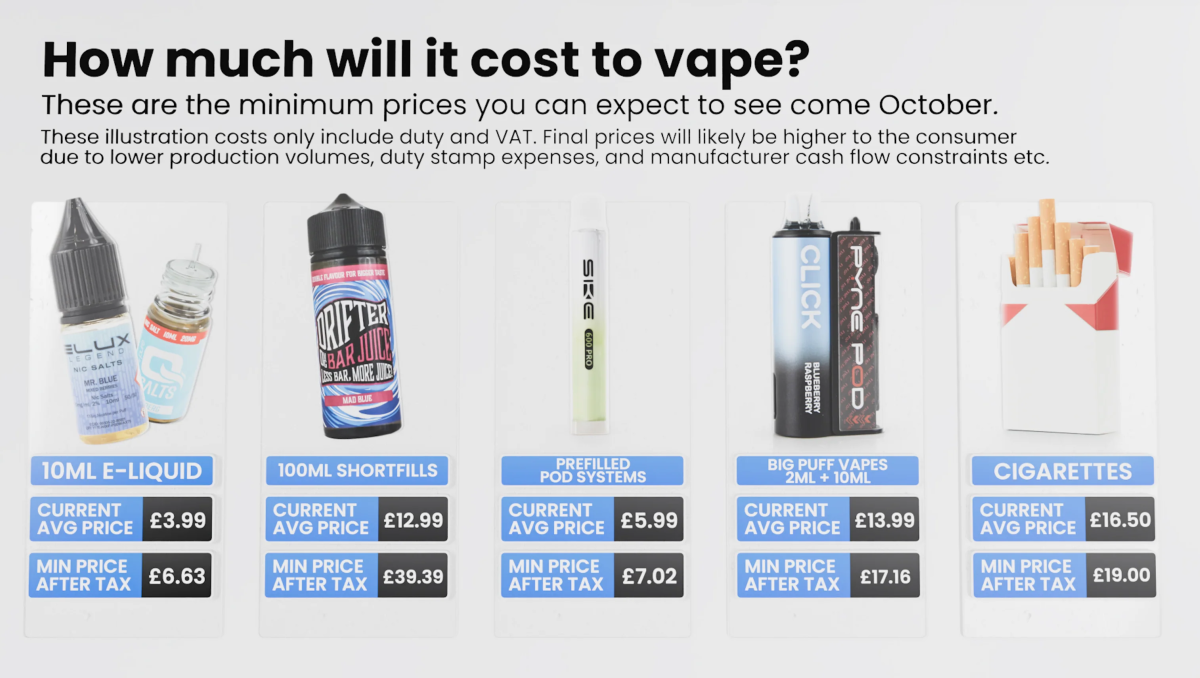
The UK’s Vaping Products Duty (VPD), scheduled to take effect in October 2026, is prompting retailers to assess how different vape categories may be affected. UK retailer Vape HQ has estimated potential price changes under the new volume-based tax system, showing that 100ml shortfill e-liquids could see prices rise from around £12.99 to £39.39, a 203% increase, while 2ml prefilled pod vape kits could rise from £5.99 to £6.52, an increase of about 9%. The estimates highlight how a volume-based tax structure creates uneven cost impacts across product categories.
Aug.19